

What does Hospital Advertising include?
It can include paid campaign assessment, permitted channel planning, ad creative, landing-page review, budget controls and reporting within scope.
Plan responsible paid hospital campaigns around approved services, suitable audiences and landing pages that explain the next step clearly.
Dr RankUp offers Hospital Advertising planning and management for Bangladesh hospital teams considering paid visibility. We assess whether an actual service can be promoted, which platforms and formats may be suitable and whether the receiving page is ready. Campaigns need claim, targeting and eligibility review; approval is never guaranteed.

Ads may lead to homepages without department details. Creative material may promise outcomes that clinical reviewers have not approved, or staff may receive enquiries for services unavailable at the advertised branch.

Problems include:
Prioritize an eligible, accurate journey—not clicks.
Better decisions before spending:Know which real service, location and visitor action a campaign is intended to support.
Accurate creative:Use approved hospital facts and avoid claims that could mislead vulnerable people.
Suitable destinations:Give visitors a relevant page with real services, doctors, location and enquiry information.
Controlled budgets:Define spend limits and approval authority before a campaign starts.
Privacy-aware measurement:Use non-sensitive conversion tracking to see general contact actions without collecting diagnoses.
Clear accountability:Review spend, policy status and enquiries separately from actual patient care outcomes.
Search ads and social ads reach people in different situations. These situations are different and require different creative decisions.
Possible journey: Eligible ad → verified service or department page → confirmed hospital information → suitable contact or appointment path.
Advertise only services available at the stated branch. Never obscure urgent contacts behind a promotional form.

BM&DC professional conduct must be considered whenever registered doctors appear in promotional claims. A qualified hospital reviewer should approve substantive clinical descriptions; no agency should promise cures, superior treatment or guaranteed outcomes.

Google restricts advertiser-curated audiences for sensitive health interests, and Meta has separate rules on health-related ad claims and personal attributes. Retargeting based on a person's illness or diagnosis is not an acceptable default plan.
The account owner must confirm current platform eligibility, country restrictions, creative requirements and policy status. Patient names, symptoms and report details must not be sent into standard ad measurement tools.

Hridoy Chowdhury, Founder, supports search-intent and landing-page relevance. Monwara Moni, Co-Founder, contributes responsible campaign messaging and creative review. Engineering support from Sirajul Islam can scope safe website or measurement changes where approved.
Confirm the real department, branch, contact route, spending limit and account owners.
Review Google Ads and Meta Advertising Standards against the proposed content, targeting and destination. The policy review records restrictions and decisions rather than assuming healthcare ads are universally eligible.
Match approved messages to verified department pages with a clear mobile next step.
Set suitable locations and approvals. Measure permitted actions without sharing health interests.
Confirm hospital ownership, clinical sign-off where triggered and platform review results. Approval cannot be guaranteed; rejected or restricted creative must not be bypassed.
Compare spend and useful contacts. Correct misleading messages rather than treating clicks as consultations.
| Hospital objective | Practical starting check |
|---|---|
| Reach people searching for an eligible service | Google Ads policy and relevant search intent |
| Share broad institutional information | Meta creative and audience eligibility |
| Inform people about a real new department | Availability, claims, page accuracy and geography |
| Promote care using patient-condition lists | Stop and redesign; sensitive targeting is high-risk |
Choose channels after reviewing offers and platform rules.



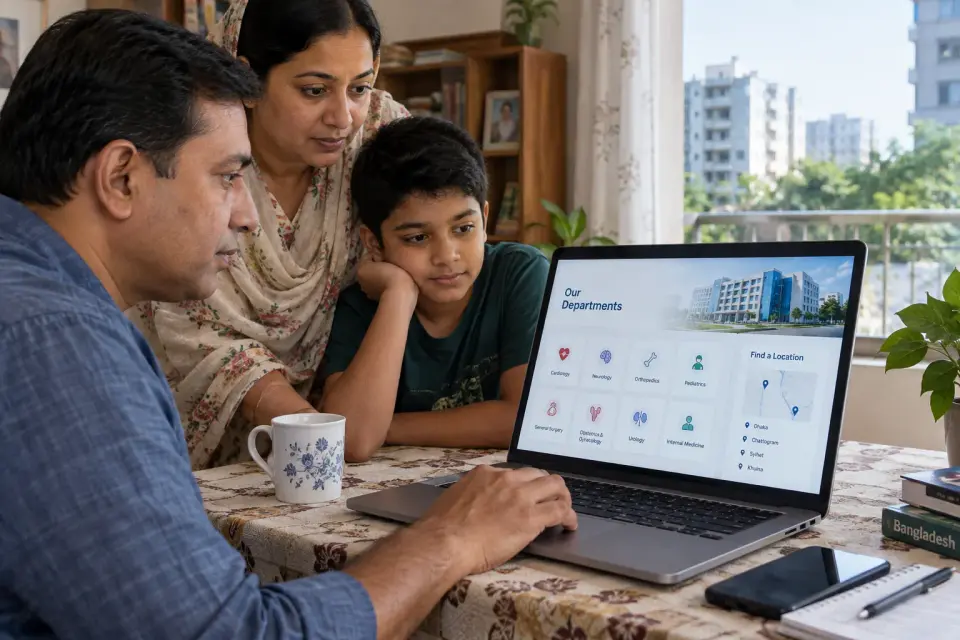

Choose this service when the hospital has an accurately documented offering, an approved contact destination, an accountable budget owner and a lawful, platform-eligible reason to communicate it.
If department pages are inaccurate or visiting times are unverified, repair them before paying for traffic. If the primary problem is organic visibility, Hospital SEO may provide a more appropriate starting assessment.


Imagine a hospital launching a verified outpatient department. The service exists, visiting information is approved and reception can handle relevant enquiries.
We could prepare a modest test with accurate messages and a dedicated information page after policy checks. This is an hypothetical scenario, not a verified campaign, approval prediction or patient-acquisition claim.
Useful reports separate proposed versus approved ads, spend, landing-page visits, permitted contact actions and the time period reviewed. They also record disapprovals and creative changes rather than hiding them.

A website click, call tap or message does not establish a completed hospital visit. We do not invent results or endorsements.
Responsibility before spend: We review availability, evidence, patient information and platform restrictions ahead of a media budget.
Clear channel boundaries: Paid planning is distinct from organic social management and hospital SEO.
Practical reporting: The hospital sees which decisions were made, what was eligible and which non-sensitive signals can actually be measured.
It can include paid campaign assessment, permitted channel planning, ad creative, landing-page review, budget controls and reporting within scope.
No. Eligibility depends on the service, country, platform requirements, creative, destination and current advertising rules.
Those channels may be assessed where appropriate, but each platform has its own approvals, targeting limitations and deliverables.
Sensitive health targeting is restricted; patient diagnoses or treatment records must not be used as routine advertising audience data.
Qualified hospital clinical reviewers should approve material medical claims, alongside institutional and platform checks where required.
No. Platforms decide eligibility and may restrict or reject ads or accounts independently of the agency.
No. Advertising is paid media; Hospital Social Media Marketing manages organic channels and approved public communication.
Against documented spend, approved campaign delivery and suitable non-sensitive actions, without presenting clicks as patients or treatments.
Start with verified services and destinations. Dr RankUp can assess eligibility, campaign scope and realistic measurement before budget approval.
Founder & SEO Consultant, Dr RankUP
Review Your Hospital Advertising Plan