

What does Clinic Google Ads include?
It covers checking eligibility, planning suitable search advertisements, reviewing the pages visitors reach, managing spending and reporting results within scope.
Help people who search for real clinic services reach clear, accurate information—with budgets and healthcare rules checked before spending.
Dr RankUp's Clinic Google Ads service focuses on eligible clinic advertising in Google Search and other suitable placements. We check what people are looking for, which services may be advertised and where ads should take them. Approvals, enquiries and patient numbers cannot be guaranteed.

An ad can send people to a page with outdated services or doctors. Broad messages may also attract enquiries the clinic cannot serve.

Common problems include:
Start with permitted services and clear information, not a big budget.
Relevant visitors:Show ads only for real, eligible services people are searching for, rather than unrelated medical topics.
Clear landing pages:The page reached after an ad should identify the real doctor, service or branch before asking someone to contact reception.
Budget control:Separate spending for different services and locations so managers can see where their money goes.
Safer reporting:Conversion tracking counts permitted calls or forms without sharing diagnoses with advertising tools.
Regular review:Check what people searched for, which clicks were unsuitable and where the clinic should stop wasted spending.
No campaign design can promise a particular cost per appointment or advertisement approval.
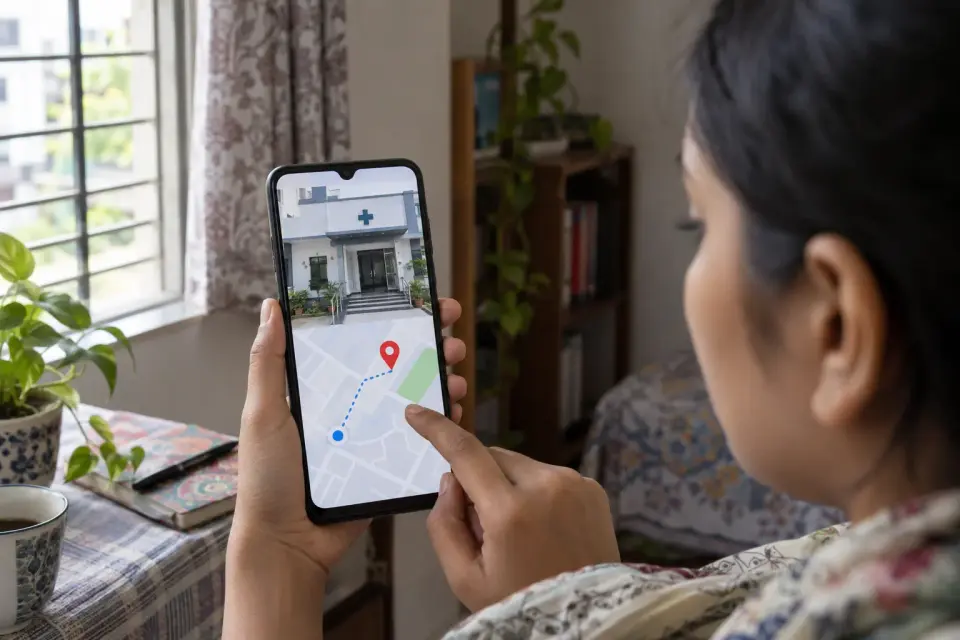
Someone looking for a diagnostic location in Dhaka may compare opening hours and branch suitability after seeing an ad. Someone in Chattogram may need verified doctor details before contacting reception.
Typical journey: Eligible search → relevant ad → accurate clinic landing page → professional/service verification → appropriate contact.
Ads must match the actual clinic's location and permitted offering. Broad searches do not justify unsuitable medical claims.

Google's healthcare rules restrict some services and countries; certain categories require certification. Check the real service and advertising account before launch.

Google's personalised-advertising rules restrict targeting based on sensitive health interests. Patient diagnoses, appointment lists or treatment signals are not safe default remarketing audiences. Measurement settings also have separate limits for health-related information.
BM&DC professional conduct and other applicable Bangladesh requirements independently govern physician promotion. Platform approval never replaces local clinical or legal review.

Hridoy Chowdhury, Founder, helps match a person's search to the right clinic service and the page they reach after clicking an ad. The paid-media team works within documented approval, tracking and reporting limits; no unconfirmed personal certification is claimed.
Document the legal clinic entity, authorised account, advertised service and target country. Check whether the proposed healthcare advertisement is permitted and what evidence Google requires before launch.
Group searches by real service and branch. Exclude unrelated terms that waste the clinic budget.
Link ads to approved services, doctors and branches. Make phone contact clear on mobile.
Separate real services and locations. Have managers approve budgets, billing and health claims.
Decide which permitted calls or forms can be counted as enquiries. Test that measurement works without collecting diagnoses or exposing sensitive patient details.
Review search terms, spend, rejected ads and suitable enquiries. Record the reasons for changes.
| Campaign situation | Necessary decision |
|---|---|
| Service category is restricted | Verify policy and country eligibility before launch |
| Landing page lacks service evidence | Repair the destination before buying clicks |
| Several branches have different offerings | Separate location and service relevance |
| Clinic lacks a realistic testing budget | Define a limited pilot or defer paid media |
Start with eligibility and truthful information. Spending more cannot solve a non-compliant service claim.


Consider it when the clinic has verified, eligible offerings, useful landing pages, an authorised advertising account and an approved budget for controlled testing.
If the clinic's services are not documented or the campaign would rely on prohibited claims, complete the compliance and content work first. When long-term organic structure is the central need, Clinic SEO may be a better initial investment.


Imagine a campaign promoting a real service in one branch but directing visitors to another branch's contact page. The visitor cannot verify location or availability.
A revised advertisement could point to the correct branch page and reception number after clinic approval. This is an hypothetical planning example, not a recorded performance result.
A useful report shows approved spending, real clicks, appropriate contact actions and any rejected advertisements. Cost-per-click and permitted contact-action cost must use recorded platform data and defined periods.

Do not equate phone taps with attended consultations or submit health details into advertising measurement. Case studies require verified and approved figures.
Policy first: We document the real advertiser and advertised service before setting targeting.
Clear route: Ads should answer a real search and lead to the right clinic service and branch details.
Accountability: Clinic budgets, allowed conversion events and review responsibilities remain explicit. No enquiry totals or policy exemptions are guaranteed.
It covers checking eligibility, planning suitable search advertisements, reviewing the pages visitors reach, managing spending and reporting results within scope.
No. Eligibility depends on the specific service, target country, Google policy and applicable local rules.
No. Google controls review and enforcement; qualified clinical and legal checks may also be required.
Sensitive health-interest targeting is restricted, and patient lists are not appropriate default audiences for clinic advertising.
Yes. Google Ads purchases eligible placement; SEO improves unpaid search structure and content over time.
The authorised clinic account owner approves spend, billing arrangements and the agreed limits before launch.
Not by default. Health-related conversions and personal data have strict limits; only approved, lawful measurement is proposed.
We review actual search terms, cost, eligible action data and policy issues rather than guessing from click volume alone.
Start with verified services, an approved destination and a current policy check. Dr RankUp can scope eligible Clinic Google Ads work.
Founder & SEO Consultant, Dr RankUP
Review Your Clinic Google Ads Plan