
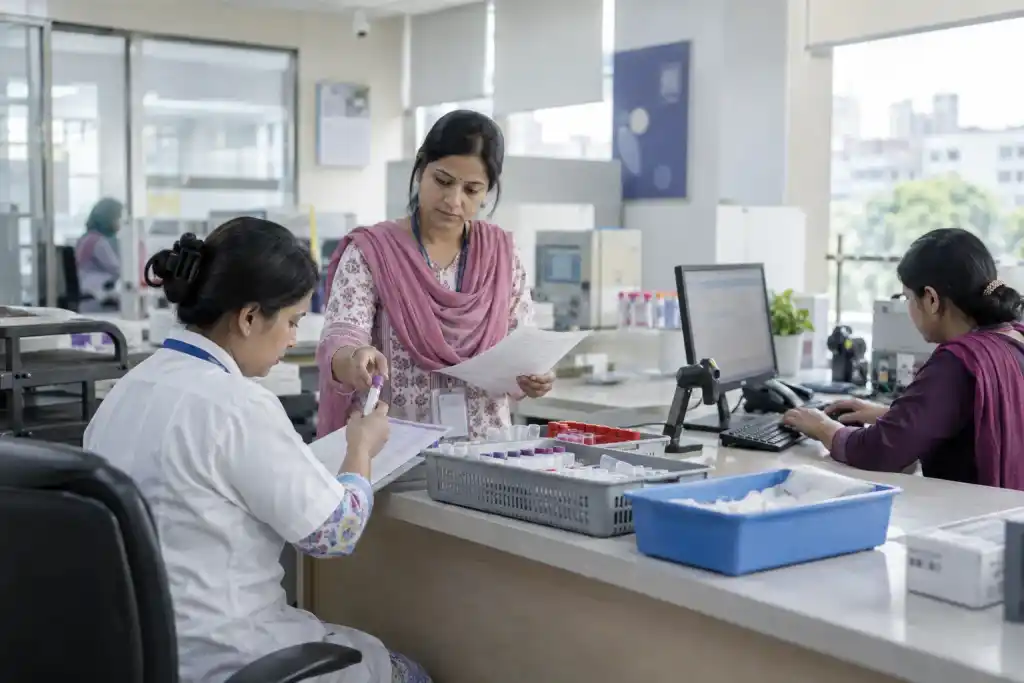
What does Diagnostic Management cover?
It covers test requests, collection status, sample handoffs, department progress and exceptions before authorised report release.
Make the journey from test request to completed investigation easier for clinic teams to follow.
Dr RankUp helps clinics in Bangladesh design Diagnostic Management for test orders, patient registration, sample collection, department handoffs and work status. Qualified staff retain clinical checking and report approval.
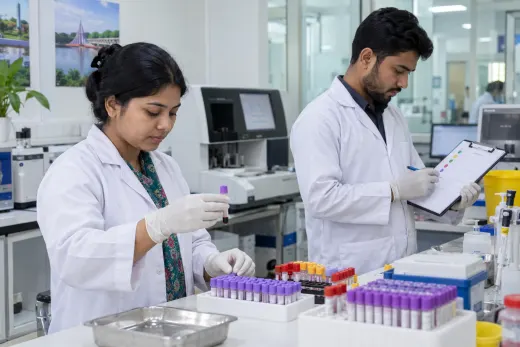
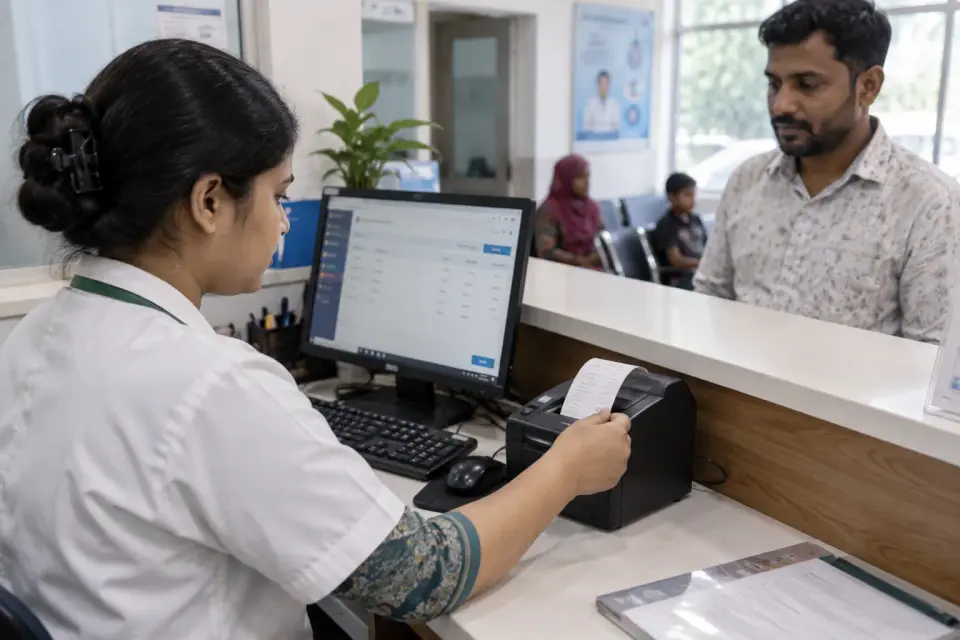
A patient books a blood test at reception, collection records the tube in another notebook and the laboratory keeps its own pending list. Staff may know that work is moving, yet nobody can explain precisely which step is delayed.

Common pain points include:
The process should show orders, completed handoffs and pending tasks.
Fewer unclear handoffs:A test-order record keeps requested investigations together rather than relying on loose slips.
Clear sample movement:Sample tracking helps staff locate a specimen's last recorded step, if collection and transport updates are maintained.
Visible pending work:Department worklists reveal which requests are awaiting collection, processing or completion.
Better front-desk answers:Reception can see appropriate nonclinical status without opening or interpreting confidential results.
Controlled corrections:An audit trail makes changes to the request or status easier to trace.
The benefit is coordination, not guaranteed accuracy or speed.
A clinic in Chattogram might collect samples locally but send selected investigations to another laboratory. A Dhaka polyclinic may have pathology collection on-site while imaging is handled by a separate department.
Typical journey: Patient registration → test order → collection instructions → identified sample → receiving section → processing status → authorised reporting handoff.
The workflow needs real test offerings, correct branch ownership, realistic collection times and a practical way to handle patients whose investigations require preparation. Clinical instructions require qualified staff.
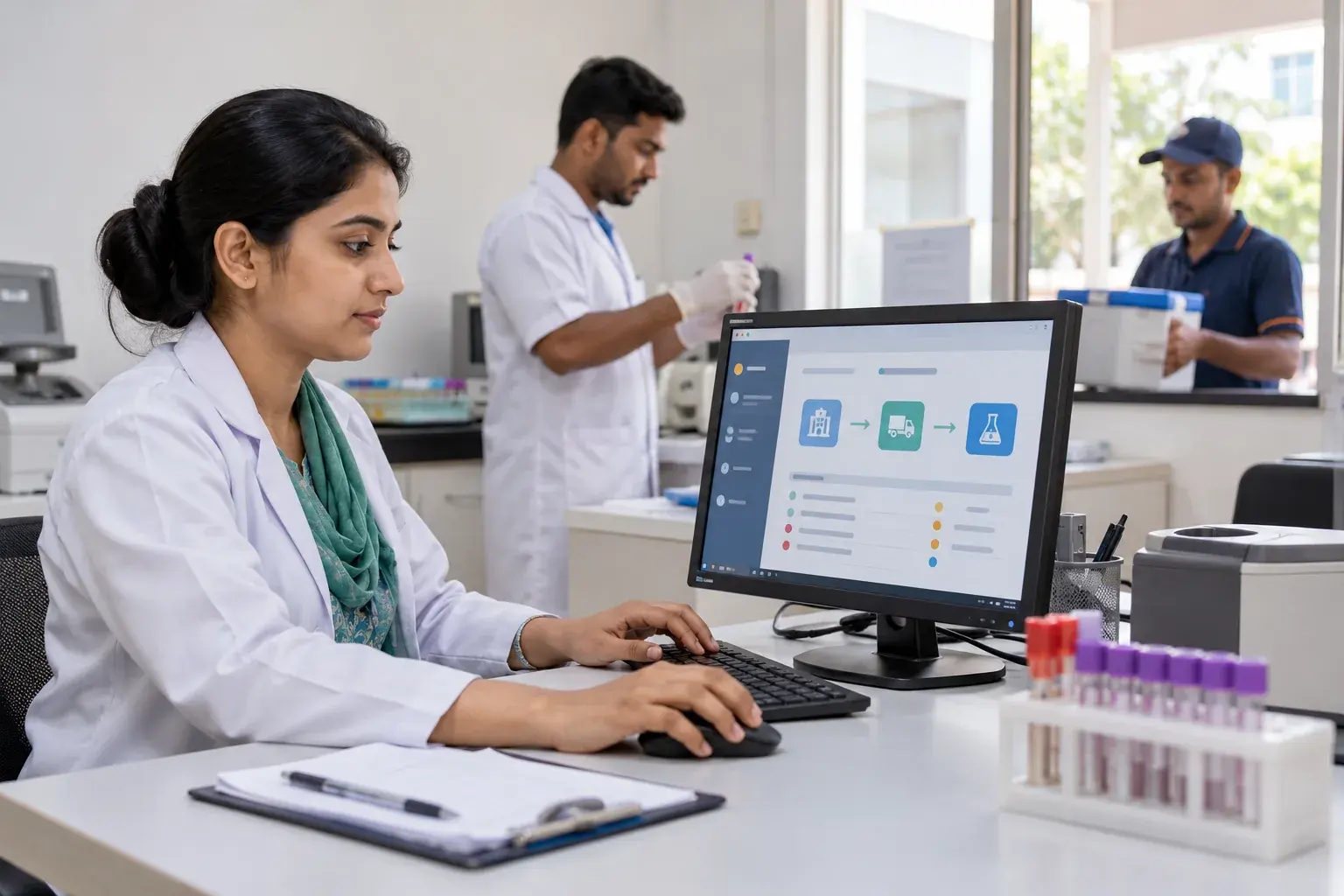
Specimen labels and patient identifiers must match the approved request. A barcode label can support identification, but the collector still needs an identity check and the laboratory's own sample acceptance rules.

A rejected or unsuitable sample should not disappear from the worklist; staff need a documented review and recollection path. Only authorised laboratory staff should change technical statuses or handle sensitive test details. Confidentiality remains essential.
World Health Organization laboratory quality guidance supports controlled sample records and reporting procedures. Software does not replace laboratory quality procedures.

Sirajul Islam, Co-Founder, brings software engineering, database, workflow automation and access-control expertise relevant to connected diagnostic systems. His role is technical design and implementation, not pathology validation.
Map test orders, samples, laboratory stages, reporting and staff responsibilities across the clinic.
Agree on patient, test and sample identifiers so staff can detect mismatches before processing.
Specify patient identifiers, specimen labels and collection checkpoints. Barcode tracking, when required, gives teams a practical way to confirm the next handoff without treating the label as proof of sample quality.
Connect equipment and report workflows only where supported. Keep failed transfers visible for checking.
Test rejected samples, wrong identities, repeat tests, delayed results and corrected reports.
Test normal orders, missing specimens, repeat collections and outsourced investigations. Train each role, document handovers and compare pending-work records before launch approval.
| Clinic setup | First useful capability |
|---|---|
| Tests collected and performed on site | Request, collection and department status |
| Collection centre sends samples elsewhere | Transfer receipt and sample custody history |
| Several diagnostic departments | Separate authorised worklists |
| Investigations handled by outside partners | Clear referral and result handoff responsibility |
Do not buy instrument connections simply because a vendor lists them. Analyser interfaces require model-specific validation and qualified laboratory involvement before any live result exchange.
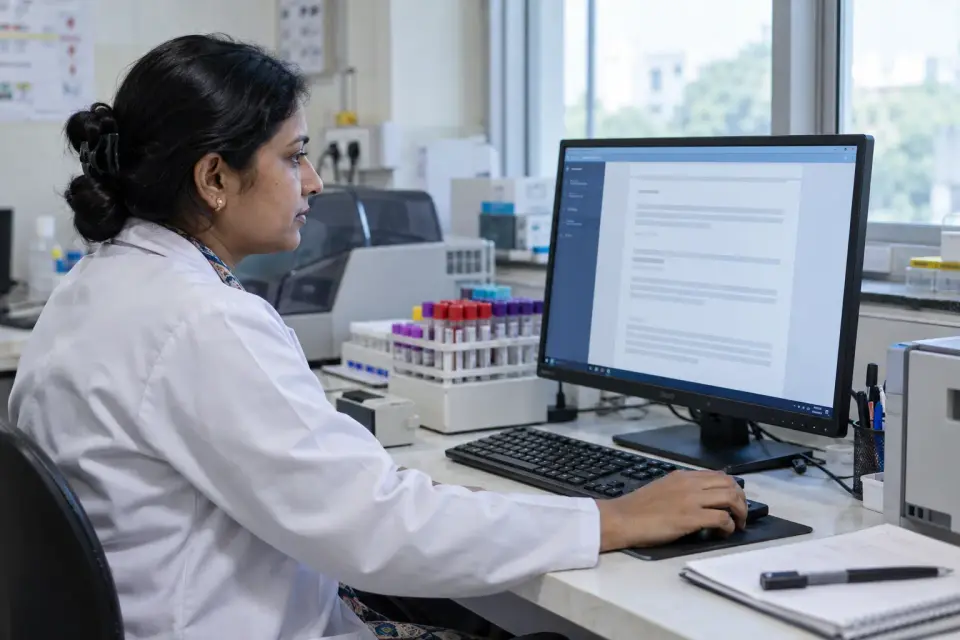

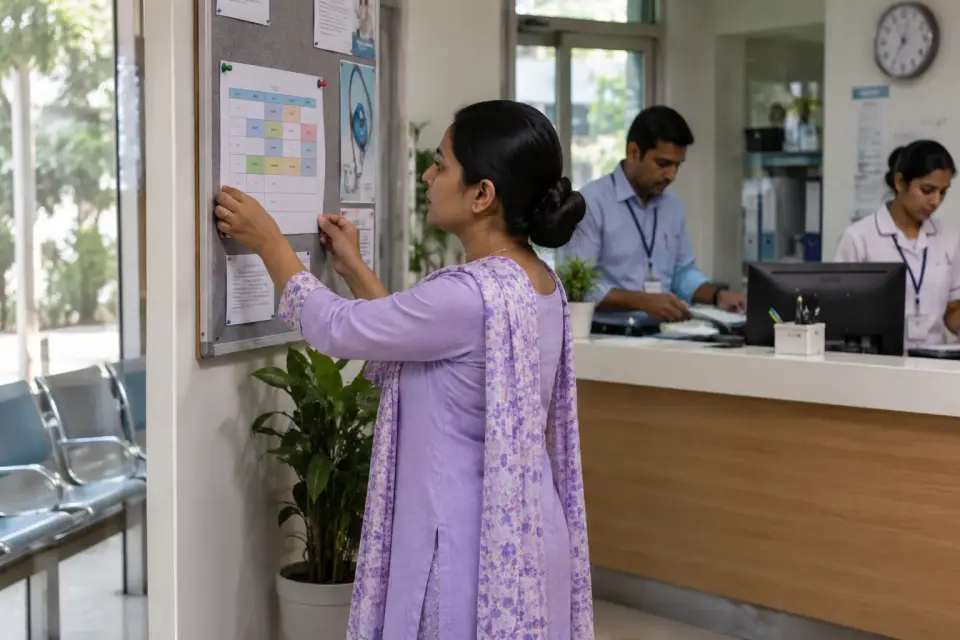
Choose this service when staff regularly telephone the bench for status, collection points send incomplete manifests, or departments cannot identify overdue pending work.
If requests already move reliably but reports are awaiting verification, start with Pathology Reporting Software. If reagent shortages stop tests, inventory control may be more urgent. We scope the first module around the observed bottleneck.

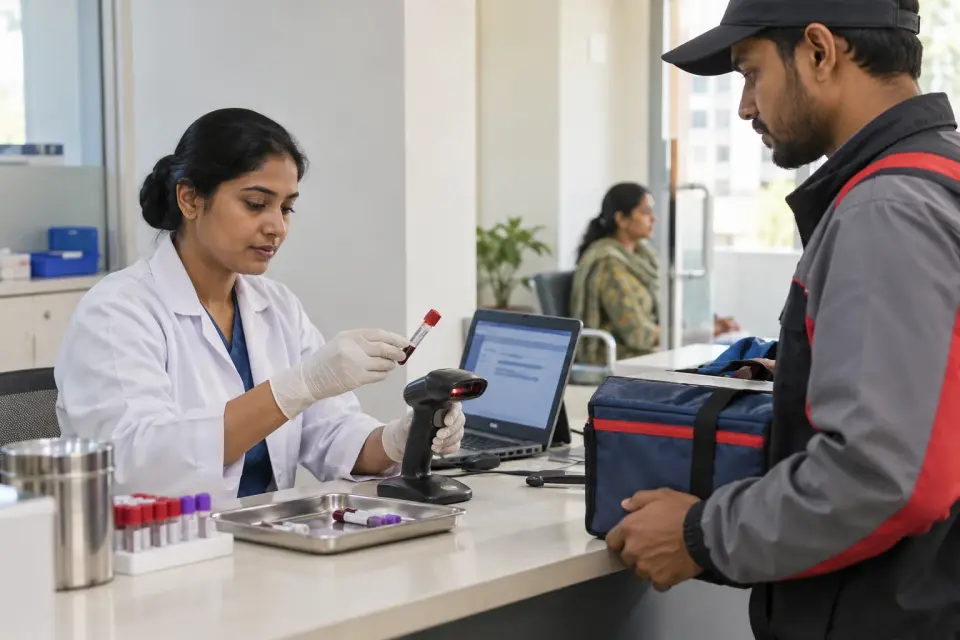
Imagine a clinic collects a specimen in Narayanganj for a test performed in Dhaka. The patient asks whether the sample arrived, but reception only has a dispatch message.
A designed process could record collection, dispatch, receiving confirmation and responsible staff, then show an appropriate status to reception. This is an illustration, not a client case.
Relevant operational measures include unmatched orders, unresolved rejected samples, overdue worklists and missing receipt confirmations. Review each metric by department and date, with actual source records.

Clinical performance, testing accuracy and diagnostic interpretation require separate laboratory quality evidence. An implementation test can show that a status changed correctly, not that the laboratory obtained accreditation or improved patient outcomes.
Follow the real test journey: We map requests, samples and reports with staff instead of copying a generic laboratory screen.
Professionals keep authority: Lab teams approve identity rules, quality decisions and access; connected departments see only suitable information.
A tested rollout: Exceptions, training and checks are agreed before delivery, without invented product counts or promised turnaround times.
It covers test requests, collection status, sample handoffs, department progress and exceptions before authorised report release.
No. Diagnostic Management tracks work; Pathology Reporting Software governs results, checking, approval and release.
That can be designed with location-specific permissions and sample handoffs when the project scope supports it.
Yes, where configured, a worklist can show delays or rejections for authorised review and follow-up.
No. Labels help tracking, but trained staff must verify patient and specimen identity using approved procedures.
Yes, agreed test-order charges can be handed to billing without allowing payment status to approve laboratory results.
Some instruments may support integration, but compatibility, validation and trained review must be confirmed separately.
No. Laboratory personnel remain responsible for sample quality, technical decisions and appropriate patient safety procedures.
Dr RankUp can help map real test journeys, define who owns each stage and plan a diagnostic workflow that clinic staff can use responsibly.

Founder & SEO Consultant, Dr RankUP
Review Your Diagnostic Workflow